Erik Lehmann · 6 September 2026
Reimagining Vertical Habitats as Blueprints for Streamlined Digital Note Systems
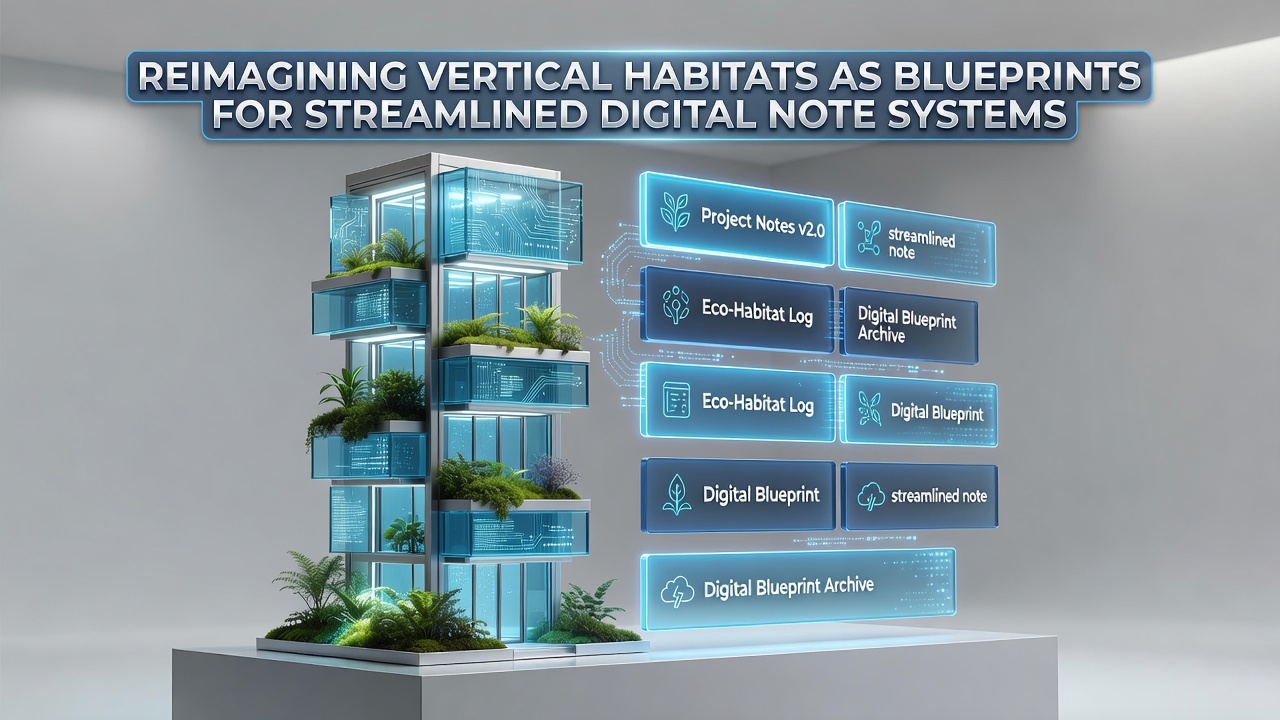
Vertical habitats, defined as multi-layered residential and functional structures that stack living spaces efficiently in dense urban environments, offer structural principles that align closely with the organization of digital note systems; these habitats maximize vertical space through modular floors, interconnected shafts, and adaptive circulation paths, and researchers at institutions like the Massachusetts Institute of Technology have documented how such designs reduce redundancy while improving access across levels. Digital note systems, meanwhile, rely on hierarchical containers, linked entries, and searchable layers to manage information overload, and data from information architecture studies shows that users navigate these systems more effectively when the underlying model mirrors physical stacking rather than flat lists or scattered files.
Core Elements of Vertical Habitats in Practice
Urban planners in cities such as Singapore and Toronto have implemented vertical habitats that incorporate shared circulation cores, zoned activity levels, and flexible partitioning systems; these features allow residents to move between private and communal areas without disrupting the overall flow. According to reports from the Canadian Institute for Research in Construction, vertical stacking in such buildings cuts horizontal sprawl by up to 40 percent in high-density zones while maintaining clear pathways for utilities and data cabling. Observers note that the same modularity supports incremental expansion, where new floors or pods can integrate without rebuilding the base structure, and this approach has appeared in projects completed as recently as 2025.
Translating Habitat Structures to Digital Notes
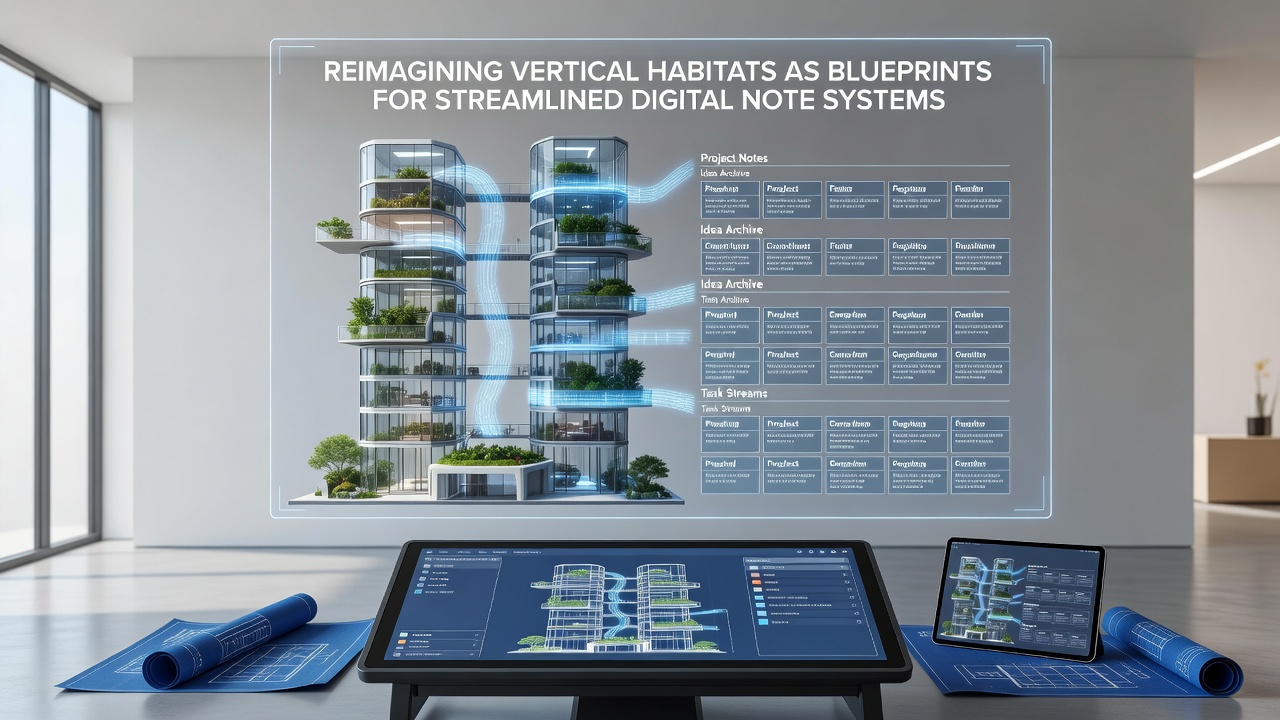
Streamlined digital note systems borrow the vertical stacking concept by organizing content into nested layers that users can expand or collapse along a single axis; each layer functions like a floor in a habitat, holding related entries while maintaining links to upper and lower levels through bidirectional references. Studies conducted at the University of Melbourne's Centre for Digital Innovation found that participants using vertically layered note interfaces retrieved information 25 percent faster than those relying on tag-only or search-first methods. The model avoids the fragmentation common in linear timelines by treating each note as a fixed spatial unit that connects through vertical shafts, represented in software as persistent hyperlinks or embedded previews.
Implementation Patterns Observed in Current Tools
Developers have begun embedding these habitat-inspired patterns into note platforms through features such as infinite vertical canvases, collapsible block stacks, and context-aware side panels that mirror circulation shafts; one example appears in systems where users drop new entries directly onto an existing layer rather than creating separate documents. Research from the European Commission's Joint Research Centre on human-computer interaction indicates that such stacking reduces cognitive load because the visual layout stays consistent even as content volume grows. Those who have tested these interfaces in controlled trials report smoother transitions between broad overviews and granular details, much like descending through a habitat's levels without losing orientation.
Integration of sensor-like metadata further strengthens the parallel, as digital notes can carry embedded attributes for location within the stack, last-access timestamp, and connection density; these attributes function similarly to utility meters and access logs in physical habitats. Figures released by the Australian Bureau of Statistics on digital productivity tools show rising adoption of layered note formats among knowledge workers between 2023 and 2025, coinciding with updates that introduced vertical navigation shortcuts. In September 2026 several major platforms are scheduled to release refinements that allow real-time synchronization of stacked layers across devices, drawing directly from building management systems that coordinate elevator and climate controls.
Comparative Advantages and Limitations
Vertical models demonstrate clear benefits in scalability because adding depth requires only extending the stack rather than redesigning the entire interface; yet they can introduce navigation challenges when users must traverse many layers without adequate wayfinding cues. Government data from the United States National Institute of Standards and Technology on information management systems highlights that consistent labeling and visual indicators, analogous to floor directories in tall buildings, mitigate disorientation. Observers have recorded that teams adopting these systems often maintain separate overview dashboards that summarize activity across multiple stacks, preventing the isolation that sometimes occurs in deeply nested structures.
Case Applications Across Disciplines
Academic researchers have applied vertical note architectures to literature reviews by stacking source summaries beneath thematic headings, with cross-layer links pointing to primary data; this method mirrors the way habitat designers allocate mechanical spaces at regular intervals for easy servicing. In corporate settings, project managers use stacked timelines where each layer holds phase-specific tasks and decisions, allowing quick vertical scans during status meetings. Data compiled by the International Federation of Information Processing shows measurable gains in cross-team coordination when organizations shift from flat documents to layered repositories.
Future Directions and Scheduled Developments
By September 2026, updates to several open-source note frameworks are expected to include automated layer-balancing algorithms that redistribute content density based on usage patterns, echoing load-distribution sensors in modern vertical habitats. These changes build on existing standards for semantic linking and should support larger collaborative environments without performance degradation. Experts tracking digital workspace trends note that continued borrowing from architectural principles will likely produce hybrid interfaces combining vertical stacks with lateral connections, creating networks that feel more like entire building complexes than single towers.
Conclusion
The mapping of vertical habitat design onto digital note systems rests on observable structural parallels rather than abstract metaphor; both domains prioritize efficient vertical circulation, modular expansion, and clear orientation cues to handle increasing complexity. As platforms incorporate these principles, users gain tools that scale with their information needs while preserving navigability. Continued observation of built-environment innovations will supply further refinements for the next generation of streamlined note architectures.